Resource Type: Technical Guidance
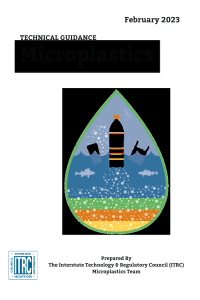
Microplastics
A broad overview of microplastics, including how they move and spread in the environment, how they are sampled and analyzed, potential health risks, regulations, and options for management and cleanup.
Environmental Data Management Best Practices
A collection of fact sheets, checklists, case studies, interactive tools, and other resources that promote effective environmental data management and decision-making.

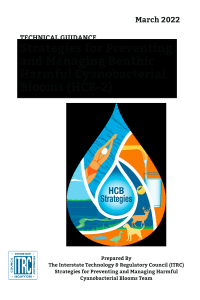
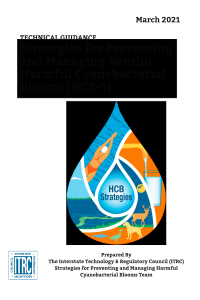
Strategies for Preventing and Managing Benthic Harmful Cyanobacterial Blooms
Guidance for evaluating and communicating the public health and environmental risks of benthic harmful cyanobacterial blooms, including best practices for managing these toxic blooms.
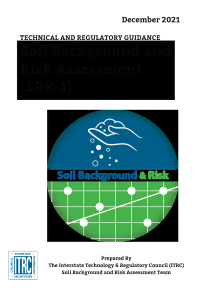
Soil Background and Risk Assessment
This guidance document provides a comprehensive defensible framework for establishing and using soil background in risk assessments.
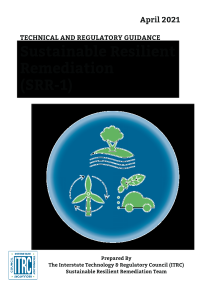
Sustainable Resilient Remediation
Current guidance, tools, and best practices for incorporating sustainability and resilience throughout the remediation project lifecycle.
Strategies for Preventing and Managing Harmful Cyanobacterial Blooms
Focuses on strategies for addressing harmful cyanobacterial blooms in freshwater environments and helps guide the selection of appropriate monitoring, nutrient reduction, in-lake management, and communication approaches for a water body.
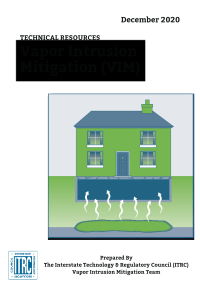
Technical Resources for Vapor Intrusion Mitigation
Designed to aid state regulators in understanding various mitigation strategies, how they are installed and fundamentally work, and what factors to consider as part of the review process.
Incremental Sampling Methodology Update
This guidance provides practitioners with recommendations for planning, collecting, processing, and interpreting incremental samples to obtain more representative and reproducible data.

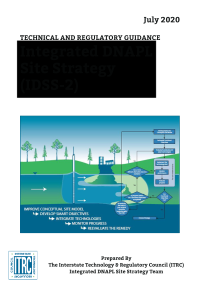
Integrated DNAPL Site Strategy
Guidance to develop a structured approach for managing sites contaminated with chlorinated solvents and dense nonaqueous-phase liquids.
1,4-Dioxane
A technical guidance document, fact sheets, and six-part modular training course that summarize the latest science and emerging technologies for 1,4-Dioxane.
