Topic Term: Petroleum Hydrocarbons
Vapor Intrusion Toolkit
This toolkit replaces, combines, and updates three previous ITRC vapor intrusion documents to create a scientifically based, consensus approach to explain concepts and best practices regarding vapor intrusion.

Effective Application of Guidance Documents to Hydrocarbon Sites
A training site with interactive workshops and tools to help users apply petroleum guidance to build site models, assess risk, and manage sites.

Total Petroleum Hydrocarbons Risk Evaluation at Petroleum-Contaminated Sites
Provides tools and recommendations for evaluating risks, assessing human health and ecological impacts, and making cleanup decisions at petroleum-contaminated sites.
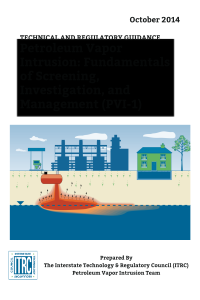
Petroleum Vapor Intrusion: Fundamentals of Screening, Investigation, and Management
Provides an eight-step process with checklists for the effective assessment and management of vapor intrusion at sites contaminated with petroleum hydrocarbons.
In Situ Bioremediation Work Team, Closure Criteria Focus Group: FY-97 Report
Evaluation of state practices for establishing and implementing closure criteria for bioventing, vapor extraction, and natural attenuation of petroleum hydrocarbons and chlorinated solvents.
General Protocol for Demonstration of In Situ Bioremediation Technologies
An outline and protocol for the general class of in situ bioremediation technologies. Includes a detailed literature review of technology-specific protocols for natural attenuation and bioventing of petroleum hydrocarbons.
Multi-State Evaluation of an Expedited Site Characterization Technology: Site Characterization and Analysis Penetrometer System Laser-Induced Fluorescence (SCAPS-LIF)
An evaluation of SCAPS-LIF technology and it’s ability to provide real-time in-situ detection of total petroleum hydrocarbon contamination both above and below the water table.