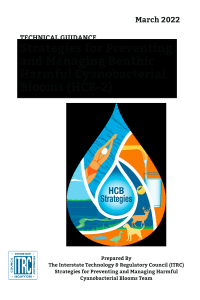
Cyanobacteria are naturally occurring microorganisms found in aquatic environments. Under favorable conditions, they can rapidly multiply and form harmful cyanobacterial blooms (HCBs), which may produce toxins that threaten human and animal health. Harmful cyanobacterial blooms can also negatively affect aquatic ecosystems, drinking water supplies, recreation, fisheries, and local economies.
This technical guidance document provides information and tools to help users monitor, manage, and respond to planktonic harmful cyanobacterial blooms in freshwater systems. The guidance includes approaches for monitoring, nutrient reduction, in-water management, and communication, along with interactive tools and resources to support decision-making. This guidance document, Strategies for Preventing and Managing Harmful Cyanobacterial Blooms (HCB-1, 2021), is part of a two-document framework that complements Strategies for Preventing and Managing Benthic Harmful Cyanobacterial Blooms (HCB-2, 2022), which focuses on benthic harmful cyanobacterial blooms, with several shared concepts and tools applicable to all HCB types.
Topic(s): Harmful Cyanobacterial Blooms (HCBs), Water Quality, Wetlands