Topic Term: Munitions Response
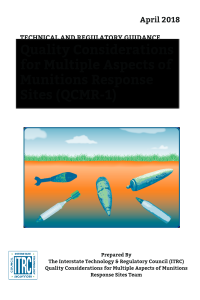
Quality Considerations for Multiple Aspects of Munitions Response Sites
Provides quality assurance and quality control practices, planning tools, decision-making frameworks, and performance standards to help ensure reliable data and consistent, defensible decisions throughout all phases of munitions response projects.
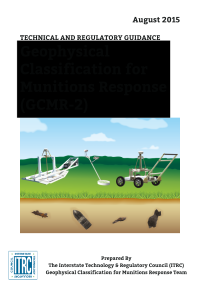
Geophysical Classification for Munitions Response
Provides guidance on planning, implementing, and evaluating geophysical classification to improve the efficiency, quality, and defensibility of munitions response projects.
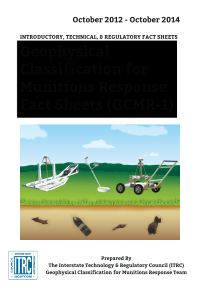
Geophysical Classifications for Munitions Response Fact Sheets
An introduction to geophysical classification for munitions response, including its background, benefits and limitations, regulatory considerations, and technical approaches for identifying buried munitions.
Frequently Asked Questions about Wide-Area Assessment for Munitions Response Projects
Helps project teams determine whether wide-area assessment is appropriate for their projects and, if appropriate, which tools or technologies are most suitable for conducting this within the munitions response area.
Quality Considerations for Munitions Response Projects
Provides guidance on defining, planning for, and achieving quality results throughout common munitions response project processes.
Surveys of Munitions Response Technologies
Provides an overview of technologies used for munitions response actions and evaluates their performance capabilities.
Environmental Management at Operating Outdoor Small Arms Firing Ranges
Assists range operators in developing, using, and monitoring appropriate environmental management plans at active outdoor small arms firing ranges.
Geophysical Prove-Outs for Munitions Response Projects
Provides information on geophysical prove-outs and the broader topics of geophysical surveys, equipment, and methodologies currently used in munitions response actions.
Munitions Response Historical Records Review
A guide for regulators, stakeholders, and others involved in oversight of historical records review projects on munitions response sites.
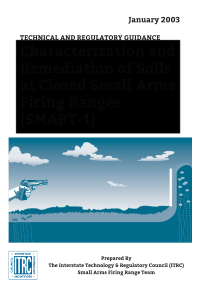
Characterization and Remediation of Soils at Closed Small Arms Firing Ranges
Assists practitioners in formulating a proper strategy for removing the threat that metal, particularly lead, presents at closed small arms firing ranges.