Topic Term: Remediation Technologies
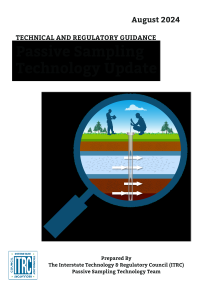
Passive Sampling Technology Update
Combines the previous ITRC passive sampling documents along with updates to the technologies into one comprehensive document that evaluates 24 passive sampling technologies.
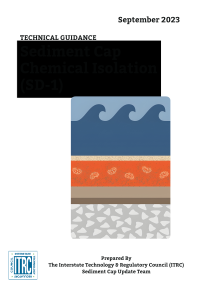
Sediment Cap Chemical Isolation
A framework for the design, construction, modeling, and long-term monitoring of sediment caps, with a focus on their chemical isolation function.
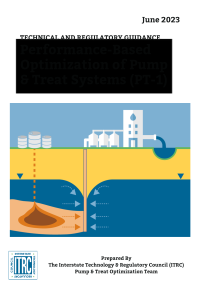
Performance-Based Optimization of Pump & Treat Systems
A technical framework for pump and treat site optimization along with interactive checklists, detailed evaluation guidance, and supporting case studies.
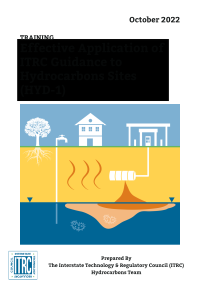
Effective Application of Guidance Documents to Hydrocarbon Sites
A training site with interactive workshops and tools to help users apply petroleum guidance to build site models, assess risk, and manage sites.
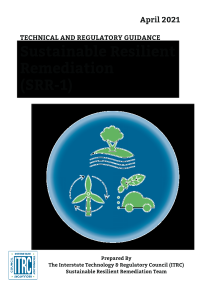
Sustainable Resilient Remediation
Current guidance, tools, and best practices for incorporating sustainability and resilience throughout the remediation project lifecycle.
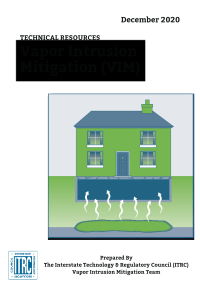
Technical Resources for Vapor Intrusion Mitigation
Designed to aid state regulators in understanding various mitigation strategies, how they are installed and fundamentally work, and what factors to consider as part of the review process.
Incremental Sampling Methodology Update
This guidance provides practitioners with recommendations for planning, collecting, processing, and interpreting incremental samples to obtain more representative and reproducible data.

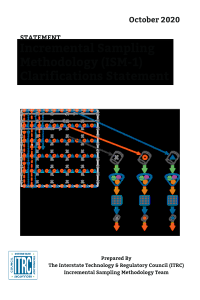
Incremental Sampling Methodology (ISM-1) - Clarifications Statement
Clarification of information in Incremental Sampling Methodology (ISM-1, 2012) that is outdated, inconsistent, or potentially misleading. Please review this statement before reading the ISM-1 document.
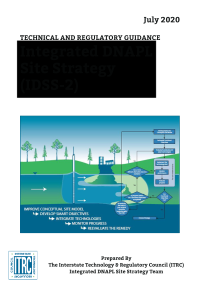
Integrated DNAPL Site Strategy
Guidance to develop a structured approach for managing sites contaminated with chlorinated solvents and dense nonaqueous phase liquids.
1,4-Dioxane
A technical guidance document, fact sheets, and six-part modular training course that summarize the latest science and emerging technologies for 1,4-Dioxane.
